
Last week, CGFoE’s Senior Communications Manager Marija Šajkaš was back in the classroom at Columbia University’s School of International and Public Affairs (SIPA), sharing her expert insights on Serbia’s unfolding political crisis.
On December 2, Marija Šajkaš, a writer, media expert, and founder of 4 Better Media, joined the graduate class Human Rights in the Western Balkans, taught by SIPA’s Professor Tanya Domi, an affiliate faculty member of the Harriman Institute.
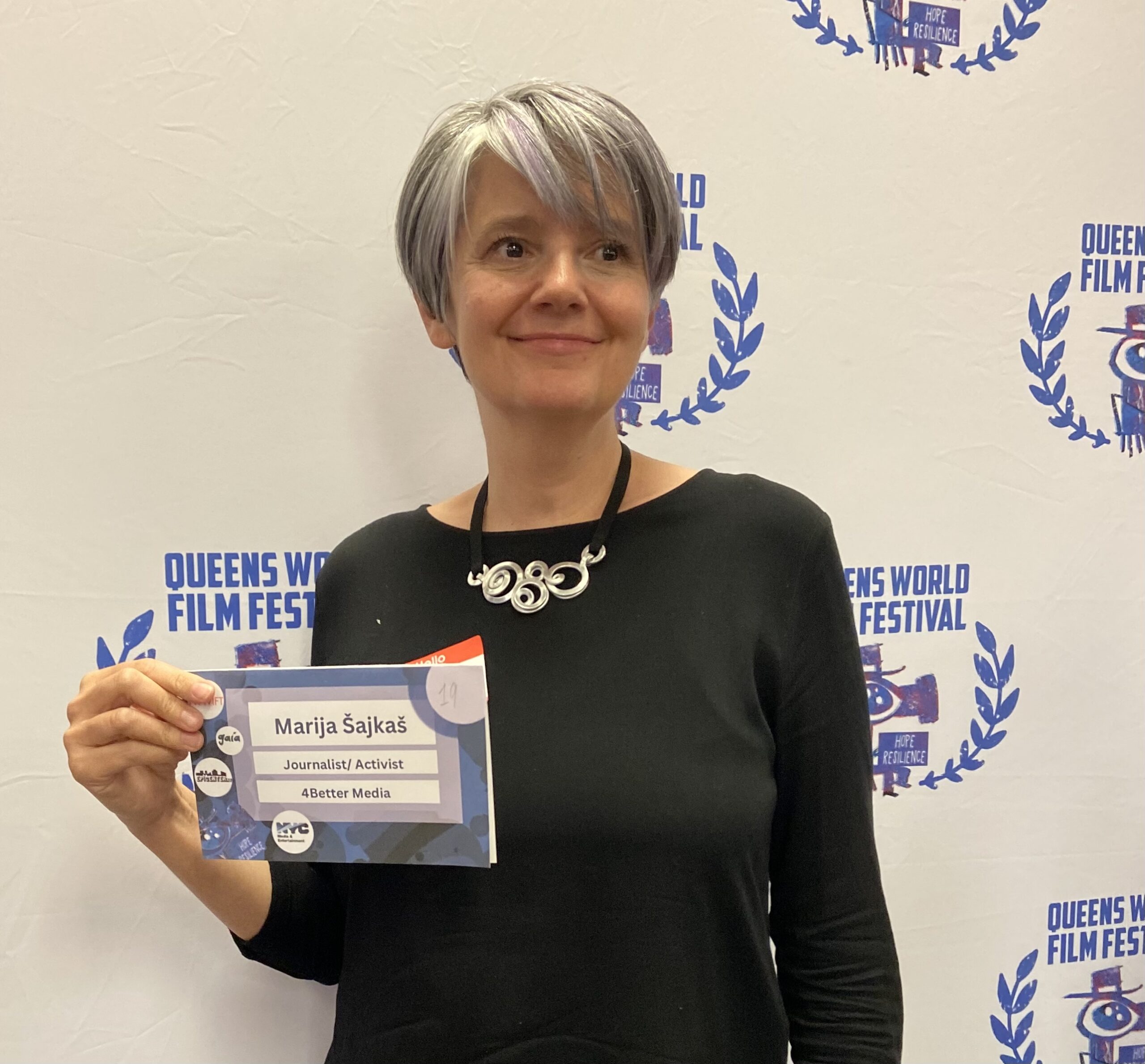
Photo: Marija Šajkaš’s personal archive
A seasoned press advocate, Šajkaš discussed freedom of expression and the media with a particular focus on the current moment in Serbia: a time of youth-led nationwide protests—the most continuous anti-government movement in the country’s history—and escalating repression, including state-sponsored attacks on journalists.
Šajkaš’s guest lecture inspired a lively and wide-ranging exchange. The group of about 20 students addressed the Serbian government’s efforts to shut down critical media outlets, the rise in surveillance, and the vitality of the protests. Many students were also interested in the role that corruption plays in Balkan societies, and some spoke on freedom from corruption as a human right.
“‘Freedom from corruption’ is not yet a standalone human right, but it is widely recognized as a prerequisite for the enjoyment of all human rights,” said Šajkaš. “International bodies consistently affirm that states have a duty to prevent corruption because corruption undermines equality, accountability, and access to justice.”
CGFoE remains committed to engaging with young scholars. Some of our latest teaching initiatives include the flagship seminar, Freedom of Expression in the Digital Realm: New Actors and Novel Challenges, designed for student teams qualified from the MENA Rounds of Oxford University’s Price Media Law Moot Court Competition, and Special Classes Series: Freedom of Expression in the European and African Regional Systems in collaboration with the University of Buenos Aires.
Authors
Marija Šajkaš
Senior Communications Manager