
As part of the monthly “Portraits of FoE Defenders” interview series, we spoke with Catalina Martínez Coral, Vice President for Latin America and the Caribbean at the Center for Reproductive Rights. A leading strategist in feminist legal advocacy, Catalina has been instrumental in advancing reproductive autonomy across the region and was recently recognized in the TIME100 Next 2025 list as one of the world’s most influential emerging leaders.
In this conversation, Lautaro Furfaro, Senior Legal Researcher at Columbia Global Freedom of Expression and Professor of International Human Rights Law at the University of Buenos Aires, examines Catalina’s central role in the innovative multi-country strategic litigation initiated in 2019 before the UN Human Rights Committee (UNHRC) by They Are Girls, Not Mothers movement, a regional coalition of more than a dozen organizations working to advance the rights of girls across Latin America. The work of the co-litigating organizations led to the landmark cases Susana v. Nicaragua, Norma v. Ecuador, Lucía v. Nicaragua, and Fátima v. Guatemala, in which the UNHRC condemned States for forcing child survivors of sexual violence into pregnancy and motherhood.
Thanks to this strategic litigation effort, the UNHRC recognized—among many other human rights violations suffered by the girls—that denying sexual and reproductive information, including comprehensive sexuality education and access to safe abortion, constitutes a violation of Article 19 of the International Covenant on Civil and Political Rights (ICCPR), affirming that without access to information, girls cannot exercise autonomy or make free and informed decisions about their health and their futures.
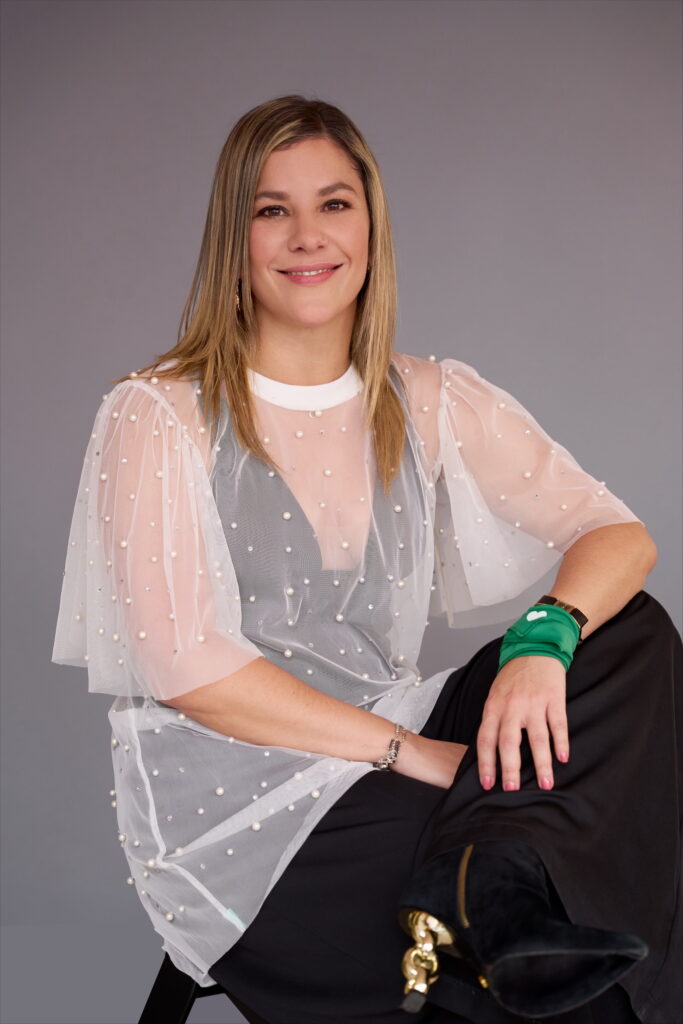
Lautaro Furfaro: Could you walk us through the strategic considerations behind litigating these cases before the UNHRC, rather than pursuing the Inter-American system? What factors made the ICCPR mechanism especially suitable for advancing an access-to-information theory in the context of the sexual and reproductive rights of girls and adolescents?
Catalina Martínez Coral: We chose to litigate these cases before the Committee because we sought recognition, within the Universal System, that the absence of information and comprehensive sexuality education (CSE) is a structural factor that enables sexual violence and the forced pregnancies and motherhood of girls and adolescents in the region. Although the Inter-American System had already advanced with Guzmán Albarracín v. Ecuador, affirming that CSE is an essential tool that States must implement to prevent sexual violence, there was still no standard within the Universal System linking Article 19 of the ICCPR—particularly its access-to-information dimension—to the sexual and reproductive rights of girls. In this context, bringing these four cases before the Committee allowed us to demonstrate, through the simultaneous litigation of four cases against three different States, that without information there is no autonomy, and that a State’s failure to guarantee CSE and access to sexual and reproductive information also constitutes a violation of the right of girls to receive essential information to protect their lives and health.
How did the Center for Reproductive Rights structure the legal argumentation on access to information and freedom of expression during the litigation process?
From the beginning, we understood that access to information was the common thread linking everything that happened to the girls in the four cases. During the litigation, we showed that they went through each stage—sexual violence, pregnancy, denial of services, and finally forced motherhood—without ever receiving the most basic information to protect themselves or make decisions. They did not know, for example, that they could request a termination of pregnancy, a remedy that even at the time of the events was permitted in countries such as Guatemala and Ecuador when there was a risk to the life of the pregnant woman, as was the case with them. This total lack of information was the focus of our argument: we wanted the Committee to understand that these were not isolated failures, but a structural violation that robbed them of the possibility of making decisions about their bodies and their life plans. The challenge was to show that Article 19—traditionally linked to freedom of expression—also protects the right of girls and adolescents to receive sexual and reproductive information that is essential to their lives and health. And finally, the Committee acknowledged this in its findings: it concluded that the lack of information prevented Fátima, Lucía, Norma, and Susana from making informed decisions and directly contributed to both the forced continuation of the pregnancy and imposed motherhood. For us, this acknowledgment was fundamental: without information, there is no real possibility of deciding, and without the ability to decide, there can’t be reproductive justice.
Do the Committee’s findings across the four cases establish a novel legal standard in international human rights law?
From my perspective, the Committee’s conclusions in the four cases should be read as a strong acknowledgment that sexual violence against girls, forced pregnancies, and imposed motherhood cannot be understood without addressing an element that was absent in all of their stories: access to timely, adequate, and evidence-based sexual and reproductive information. The decisions consolidate something that had not been developed with such clarity in the Universal System until now: that the lack of information on sexual and reproductive health for girls and adolescents —including the possibility of accessing abortion—can constitute a violation of Article 19 of the Covenant.
I also believe that these decisions open an important normative path at the global level. By assessing how the lack of information directly contributed to the forced pregnancies and motherhoods of Fatima, Lucia, Norma, and Susana, the Committee is saying that access to reproductive information is a precondition for the full exercise of freedom of expression in its dimension of “seeking and receiving information.” This has enormous implications for the future, because it places sexual and reproductive information—and within it, comprehensive sexuality education—as an essential component of the rights framework of the ICCPR.
What do you identify as the most pressing challenges for the protection of women’s and girls’ freedom of expression and access to information on reproductive health, and how is the Center for Reproductive Rights supporting the implementation of these standards at the national or regional level?
One of the most pressing challenges is for States to recognize that access to sexual and reproductive information is not an option, but rather an obligation and an essential condition for girls and women to exercise their autonomy and protect their health and lives. In many countries in the region, enormous gaps persist: restrictive criminal frameworks that discourage the search for information, health systems that do not provide clear, evidence-based guidance, schools where comprehensive sexuality education is still absent or limited, and a justice system that revictimizes or fails to adequately investigate sexual violence. All of this has a direct impact on girls’ ability to understand what they are experiencing, seek help, and make informed decisions. Furthermore, in contexts of poverty or rurality, information barriers multiply and deepen inequality, as recognized by the Committee in its rulings.
At the Center for Reproductive Rights, we are working with our local partners to ensure that the standards established by the Committee translate into concrete changes. At the national and regional levels, we are supporting regulatory reforms that guarantee clear and accessible information on sexual and reproductive health; promoting the implementation of comprehensive sexuality education; strengthening the capacity of health and justice personnel to provide unbiased information without revictimization; and monitoring compliance with rulings. We are also developing technical tools, research, and training opportunities to enable institutions, communities, and decision-makers to adopt these standards. In essence, we seek to ensure that the recognition of access to sexual and reproductive information as a pillar of freedom of expression and reproductive justice does not remain merely declarative but rather transforms the lives of girls and women in the region.
What is most innovative about the Committee’s interpretation of Article 19 in these cases?
The most innovative aspect of the Committee’s interpretation is that CSE and sexual and reproductive information are prerequisites for exercising autonomy and freedom of expression in a full sense. In order to make decisions, a girl needs to understand what consent is, identify when she is being sexually abused, know the risks that child pregnancy poses to her life and health, and know that there are services and alternatives available to her. All of this requires clear, accessible, and evidence-based information. The cases reveal this with overwhelming force: none of the girls had the minimum tools to understand what they were experiencing or to make free and informed decisions about their bodies. By recognizing this direct link between information and autonomy, the Committee takes a decisive step toward a deeper and more protective interpretation of Article 19.
You played a central role in leading the strategic litigation behind the “They Are Girls, Not Mothers” cases before the UNHRC. What motivated you to undertake this complex, multi-country effort over so many years, and what has sustained your commitment to this cause throughout the challenges of litigating such deeply sensitive human rights violations?
What motivated me to take on this litigation for so many years was the certainty that the girls whose cases we brought had been forced into something no child should ever experience: a forced motherhood. When I learned the stories of Lucía, Susana, Norma, and Fátima, I understood that what they endured was not only sexual violence, but the most extreme consequence of that violence—being compelled to carry a pregnancy, give birth, and assume motherhood when they were still children. For me, that is one of the most profound and painful forms of dispossession: it takes away their bodies, their childhood, their health, and their future. And what is hardest to accept is that, in most cases, the very institutions that were supposed to protect them were the ones that failed them. What sustained my commitment was knowing that their fight went far beyond their individual stories and spoke for thousands of girls across Latin America who continue to face pregnancies and motherhood imposed by violence, poverty, silence, and States’ indifference. Accompanying them through this process reaffirmed something essential for me: reproductive justice is impossible unless we start by recognizing that girls have the right not to be forced into motherhood, and that litigating these cases was a way to break that cycle and open a different path for all of them.
Authors

Lautaro Furfaro
Senior Legal Researcher
Professor of International Human Rights Law at undergraduate level and Foundations of Human Rights at postgraduate level at the University of Buenos Aires; Professor of International Law, Torcuato Di Tella University and University of San Andrés